There is a moment that almost every successful mycelium project encounters.
Oddly enough, it has very little to do with fungi.
It arrives quietly, often after the excitement of the first successful prototype.
The mould opens…. The material looks exactly as you had hoped.
People gather around the table, photos are taken. The object feels real.
For a brief moment, it is tempting to think: “We’ve done it.”. In reality, something much more interesting has just begun.
A prototype answers only one question.
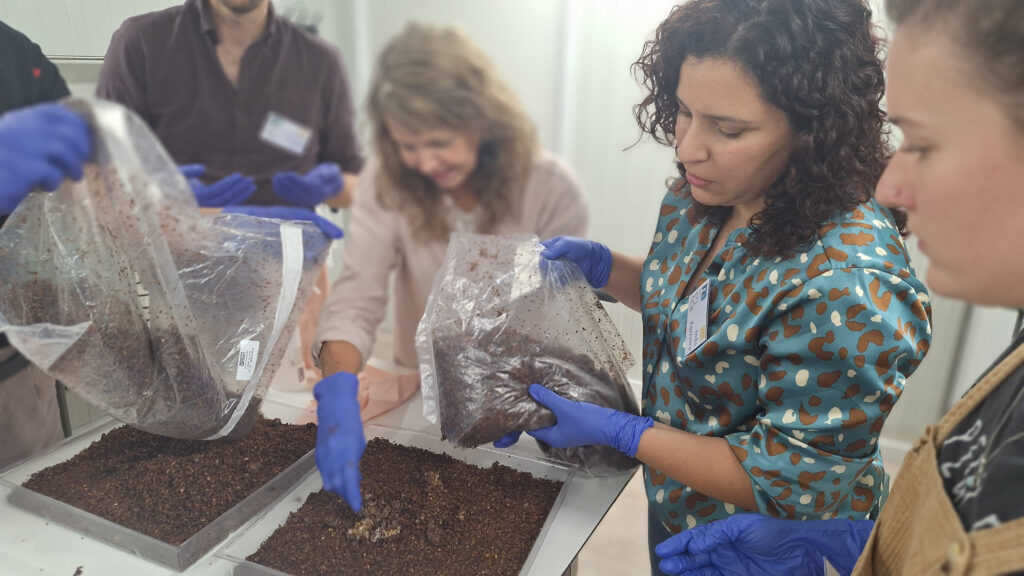
Every prototype, no matter how beautiful, answers a remarkably simple question: “Is this possible?”
Can this fungus colonise this substrate?
Can this geometry be produced?
Can this material survive demoulding?
Can this concept exist?
Those are important questions. Without prototypes, innovation never moves forward. But they are also the easiest questions a production process will ever answer.
Industrial production asks entirely different ones.
Can the same result be reproduced tomorrow?
Can another operator obtain the same outcome?
What happens when the substrate changes slightly?
What happens when ambient humidity changes?
What happens when production doubles?
The transition from possible to repeatable is where many promising projects quietly become much more complicated.
When small differences start to matter
One of the most persistent misconceptions surrounding emerging biomaterials is that scaling simply means making more.
It doesn’t.
Every increase in production introduces new variables:
- Heat behaves differently.
- Air moves differently.
- People work differently.
- Raw materials vary.
- Equipment introduces its own behaviour.
- Time itself becomes another variable.
Suddenly, what seemed like a reliable process begins producing different results. Not because anyone made a dramatic mistake, but because the production system became more complex than the prototype ever needed to be.
Scaling is therefore not multiplication.
It is redesign.
The invisible transition
Most teams don’t notice the moment they cross from experimentation into manufacturing.
There is no announcement. No milestone. No warning light.
Instead, the questions slowly change.
Early conversations revolve around creativity.
Later conversations revolve around consistency.
Eventually they become conversations about risk. And about…
- Quality.
- Variation.
- Process capability.
- Documentation.
- Operator training.
- Raw material specifications.
- Quality control.
At that point, the material itself is often no longer the biggest challenge.
The production system is.
The process becomes the product
This is perhaps the most important shift of all. During experimentation, we tend to think that the material is the innovation. In manufacturing, something else becomes equally valuable. The process.
Two companies can produce materials that look almost identical. One succeeds commercially. The other struggles for years. The difference is often not the fungus. It is the production system behind the fungus.
Reliable manufacturing is built on thousands of small decisions that most people never see.
- Substrate preparation.
- Heat treatment.
- Inoculation strategy.
- Environmental control.
- Cleaning routines.
- Quality assurance.
- Sampling.
- Documentation.
None of these are particularly glamorous. Together, they determine whether production remains consistent and repeatable.
Understanding before optimisation
The pressure to optimise arrives surprisingly early in many projects.
People want faster growth, lower costs, automation. They want higher density, different textures, improved water resistance, better fire performance. These ambitions are entirely understandable.
Yet optimisation only works when the underlying process is already understood. Optimising a process that is not yet stable often accelerates confusion rather than progress: A slightly faster process is of little value if nobody understands why it worked yesterday but failed today. Understanding always comes before optimisation. Or at least it should.
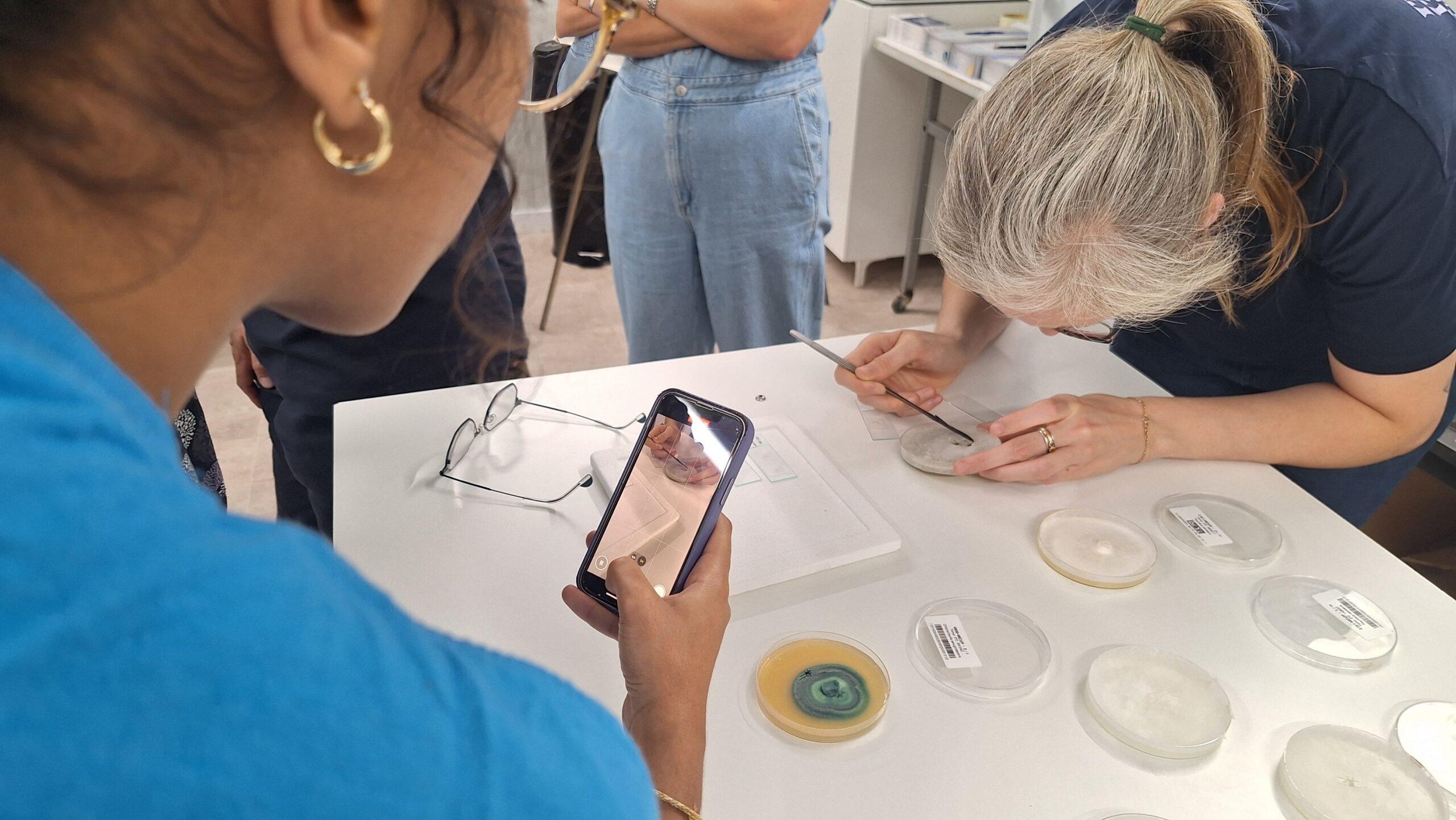
Why this matters
The world needs better materials. It also needs realistic expectations.
Mycelium offers extraordinary possibilities. But fungi don’t become easier to grow, control or scale simply because enthusiasm grows. Nor because funding increases. Nor because a prototype receives attention. Living systems continue to follow their own biological rules. Our role is to understand those rules before trying to industrialise them.
Industrial production has always asked the same question: Can this process be understood well enough to become predictable? Everything else follows from there.
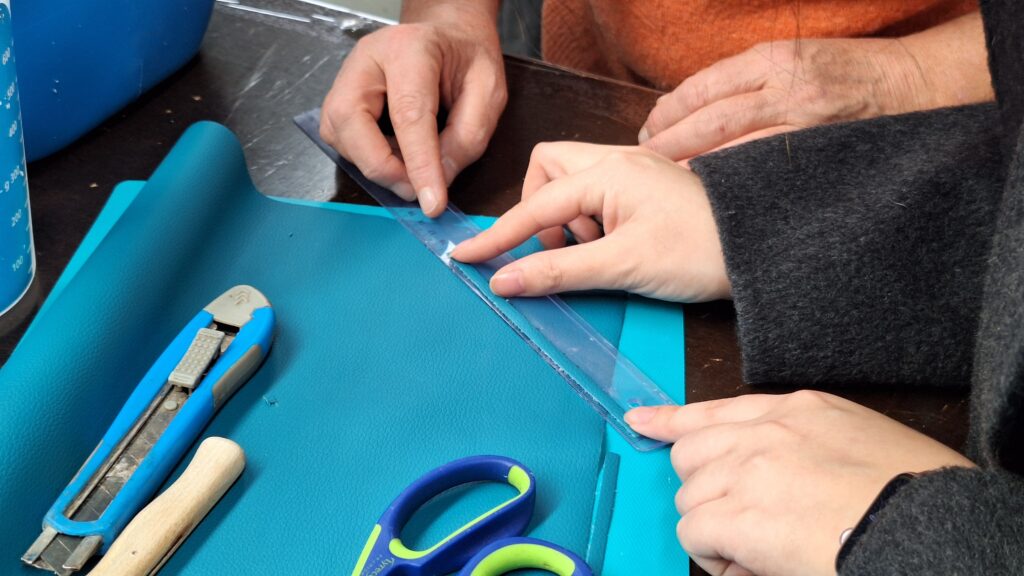
A final reflection
Perhaps this is the biggest difference between an inspiring prototype and a successful product. A prototype demonstrates possibility. A manufacturing process demonstrates understanding.
Beautiful objects attract attention, reliable biological systems build industries. And in the long run, it is the second that changes the world.
Want to explore what mycomaterials production looks like beyond the prototype stage?
This article is part of a broader series exploring what it takes for mycomaterials to move beyond promising concepts and become reliable, scalable and competitive materials. Because the real questions begin where the story ends: with performance, process, consistency, cost and scale.