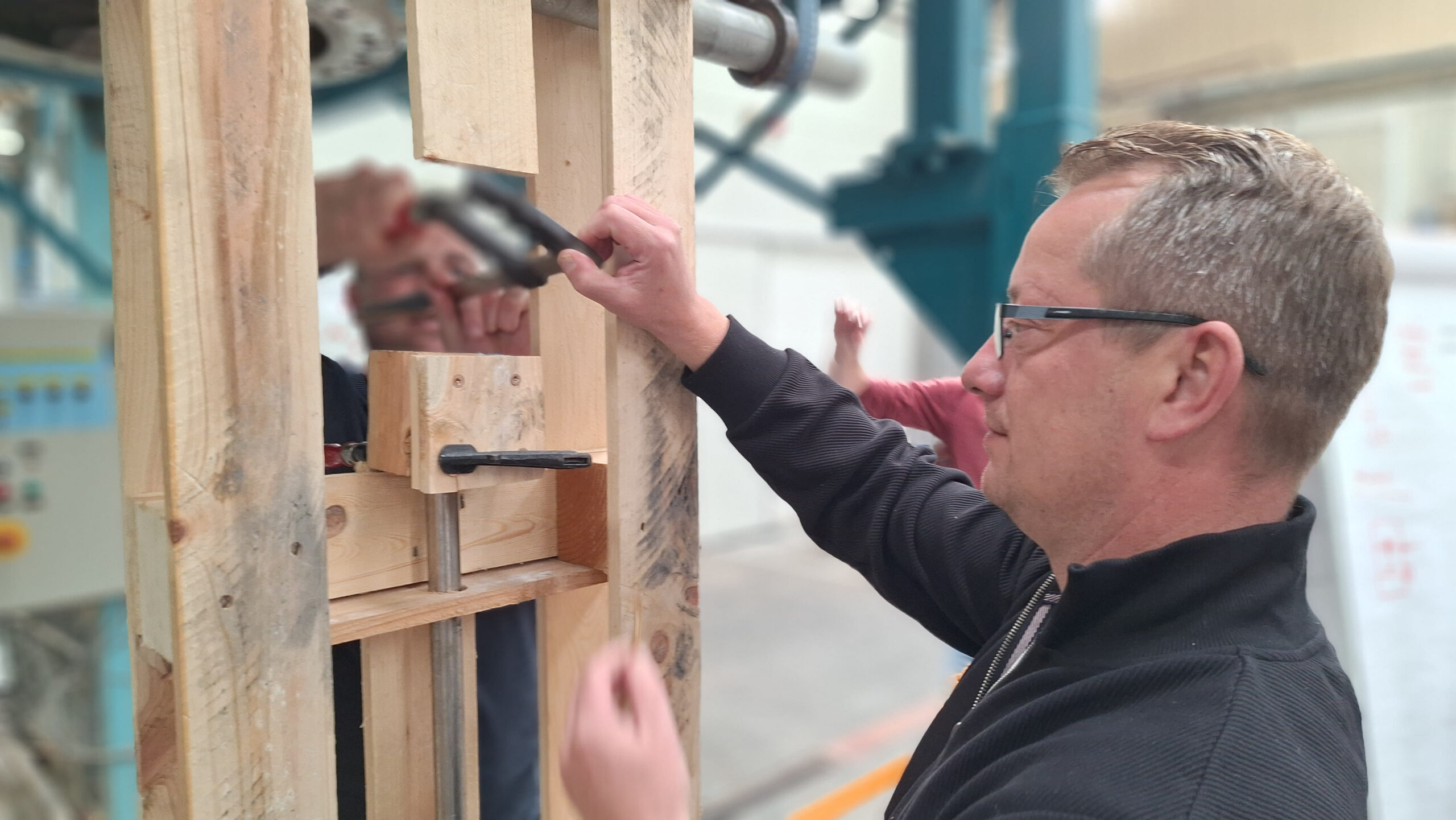
Every material remembers the production decisions that shaped it.
Why finished materials often reveal more about your process than your production log ever will.
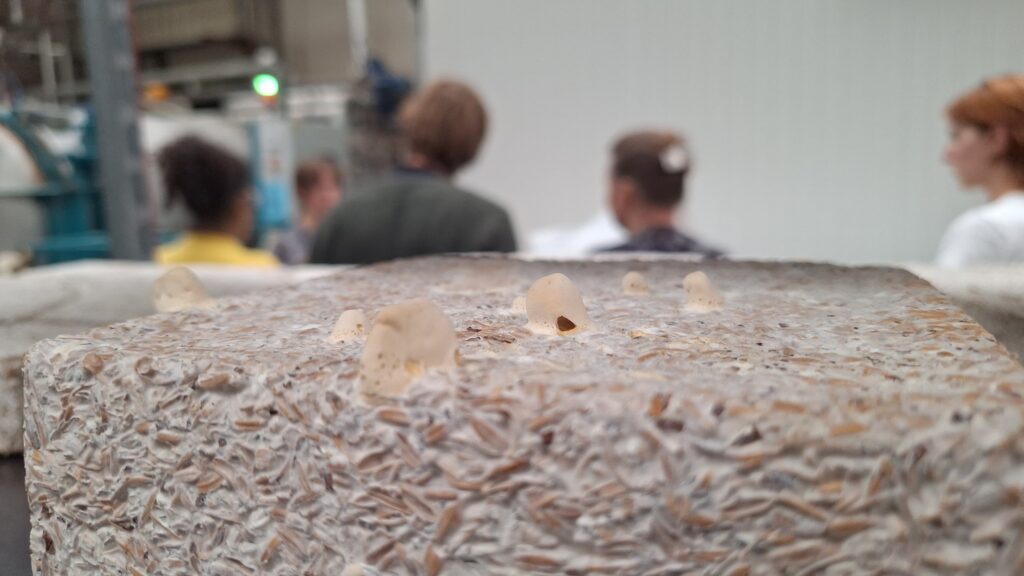
Imagine placing mycelium-based packaging inserts next to each other. At first glance, they appear almost identical: The same dimensions. The same colour. The same finish. Perhaps even the same fungal species.
Yet after a few simple tests, they begin telling completely different stories.
- One withstands compression remarkably well.
- The other deforms under the same load.
- One fractures unexpectedly.
- The other maintains its shape.
- One feels surprisingly light.
- The other is denser than expected.
What happened?
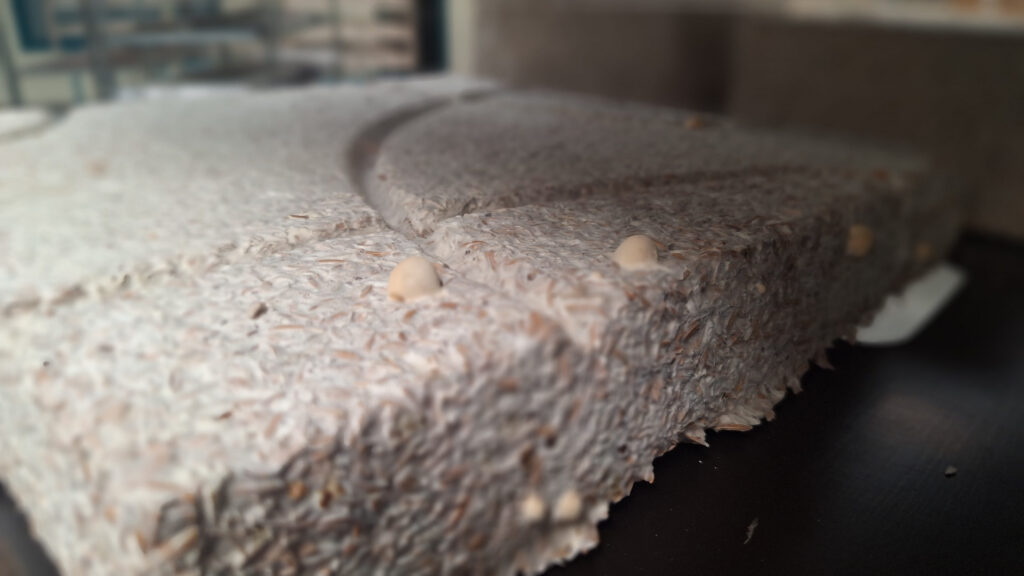
Most people immediately start looking at the finished material. Experienced producers start looking much earlier.
Because a finished material is not simply an object.
It is the visible outcome of hundreds of biological and technical decisions made throughout the production process.
Every material carries a history
Materials don’t suddenly acquire their properties during the final stages of production.
Long before a material reaches its final form, its behaviour has already been shaped by countless decisions made throughout the production process.
Every stage leaves its mark:
- The biological choices – fungal species, inoculation strategy.
- The substrate – composition, particle size, packing density, moisture distribution.
- The mould – material, shape, surface texture and release behaviour.
- The process – heat treatment, incubation conditions, gas exchange and drying.
Every step influences the next. Every decision leaves a fingerprint.
By the time the material reaches your workbench, that history has become impossible to erase.
The material remembers. Even when we don’t.
Looking beyond appearance
One of the biggest traps in biomaterials development is judging success by appearance alone: A smooth surface feels reassuring, a consistent colour looks professional, a beautiful prototype photographs well.
But appearance rarely predicts performance.
Two materials that look identical can behave completely differently once they encounter real-world conditions.
- Will they withstand compression?
- Will they retain their dimensions?
- Will they withstand repeated loading?
- Will they behave consistently across multiple production batches?
These are the questions industry eventually asks. And they are questions that appearance alone cannot answer.
Testing is a conversation
Many people think of material testing as the final step in product development.
A box to tick before moving on.
We see it differently.
Testing is a conversation with your production process.
Every measurement asks the same underlying question:
“Why does this material behave the way it does?”
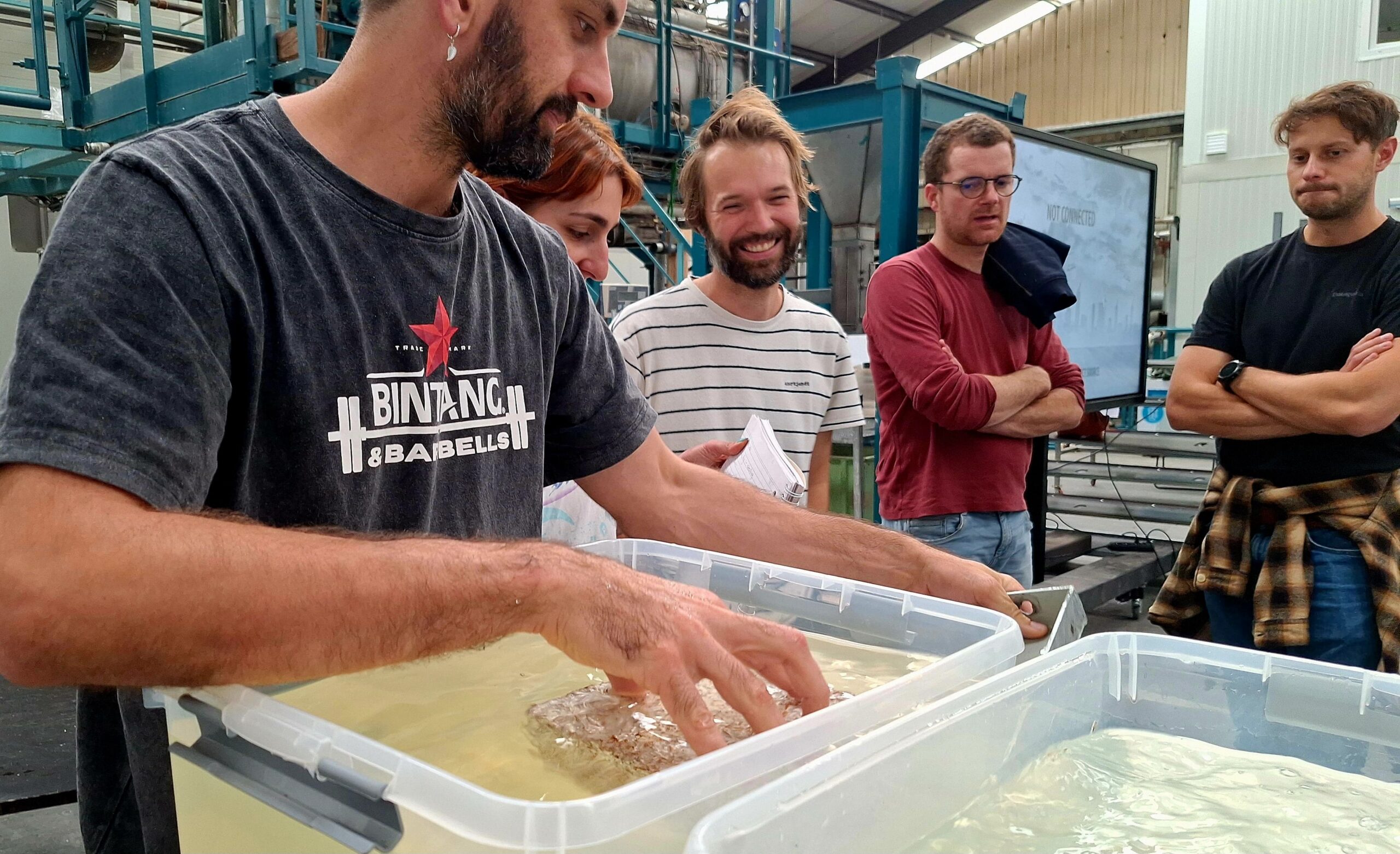

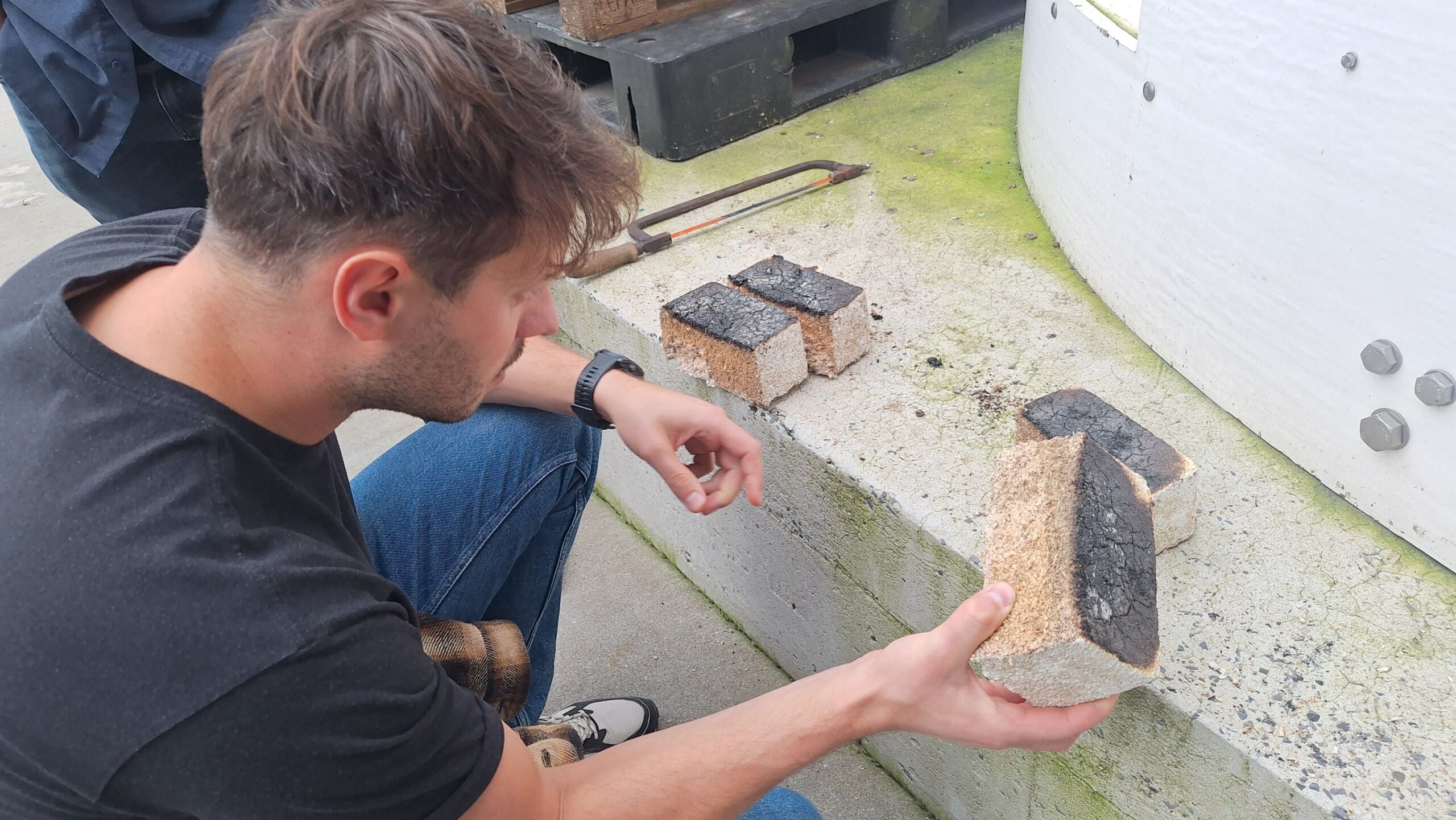
A compression test is not simply about strength. It is about structure, compaction, growth behaviour, drying.
A bending test is not only about strength. It reflects how the biological network developed throughout colonisation.
Even density tells a story. Not because higher is always better. But because unexpected variation often reveals something upstream that deserves attention.
The finished material becomes a messenger. The challenge is learning its language.
Stop treating results as isolated events
When a material underperforms, there is a natural temptation to search for a single cause:
- Perhaps the fungal strain?
- Perhaps the substrate?
- Perhaps the mould?
Reality is rarely that simple. Living systems rarely produce isolated problems. They produce interacting effects.
- Changing substrate moisture influences oxygen availability.
- Oxygen availability changes growth patterns.
- Growth patterns influence density.
- Density influences water absorption and mechanical behaviour.
One decision quietly reshapes many outcomes. This is why solving only the symptom often leads to frustration. The material changes. The underlying process remains exactly the same.
Consistency is the real challenge
Creating one excellent material is an achievement. Creating fifty excellent materials is something else entirely.
Consistency asks uncomfortable questions: Can another operator achieve the same result? Will tomorrow’s batch behave similarly? What happens when raw materials vary slightly? What happens during winter? Or summer?
Industrial production is not built on exceptional batches, it is built on predictable ones. And predictability begins with understanding.
Reading materials instead of judging them
Perhaps the most valuable habit experienced producers develop is curiosity.
Instead of asking: “Is this material good?”, they ask: “What is this material trying to tell me?”
That small shift changes everything.
Suddenly, every unexpected result becomes information: Not failure, not disappointment. Information.
A material that absorbs more water than expected is not merely a weaker material. It may be revealing something about substrate structure. Or colonisation. Or drying.
If a packaging insert turns out denser than expected, it doesn’t necessarily mean something went wrong. It is describing the process that created it.
Every finished object becomes feedback.
If we are willing to listen.
Understanding before optimisation
Many projects begin searching for better materials remarkably quickly.
- A different fungus.
- A different recipe.
- A different additive.
- A different mould.
Sometimes those changes are necessary. Often they are simply premature.
Without understanding why the current material behaves as it does, optimisation becomes little more than educated guesswork. Understanding remains the most valuable process improvement tool available.
Not because it produces immediate answers. But because it leads to better questions. And better questions almost always produce better materials.
Final reflection
Perhaps the greatest difference between experimentation and manufacturing is this: Experimentation celebrates successful outcomes, but manufacturing seeks repeatable explanations.
One asks: “Did it work?”
The other asks: “Why did it work?”
Only the second question can build a production system. Because in the end, materials don’t simply reveal their own properties. They quietly reveal the quality of the process that created them.